

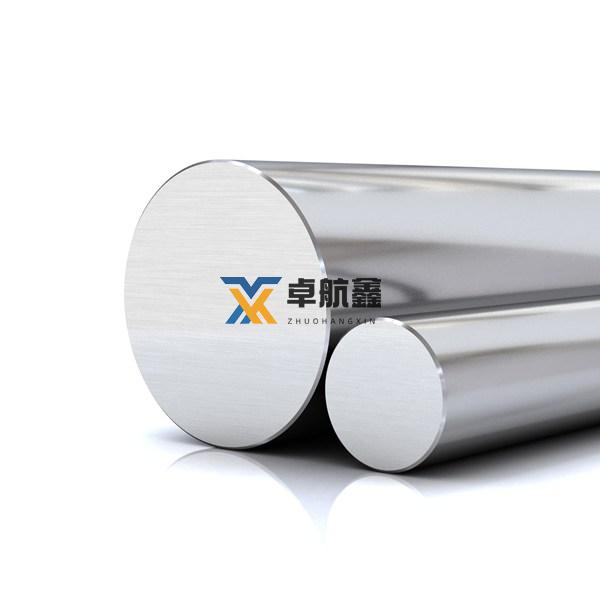
titanium rod
Specification: Diameter ranging from 7mm to 230mm
Standards: GB/T2965, GB/T25137
ASTM B348 ASTM F136
ASME SB348 AMS4928
Product Details
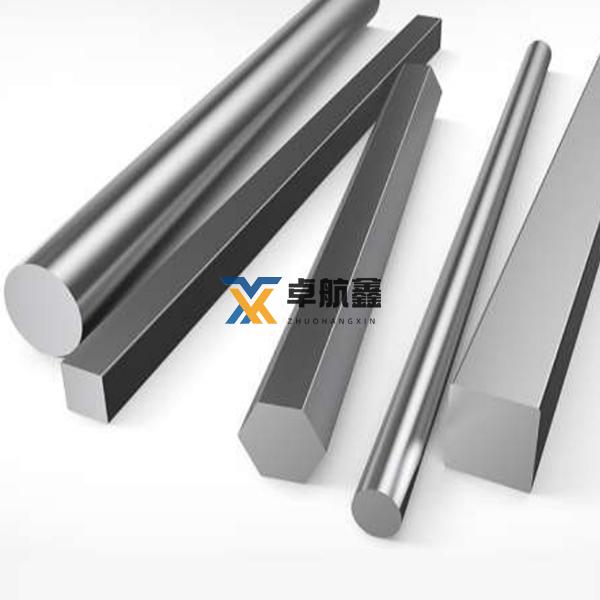
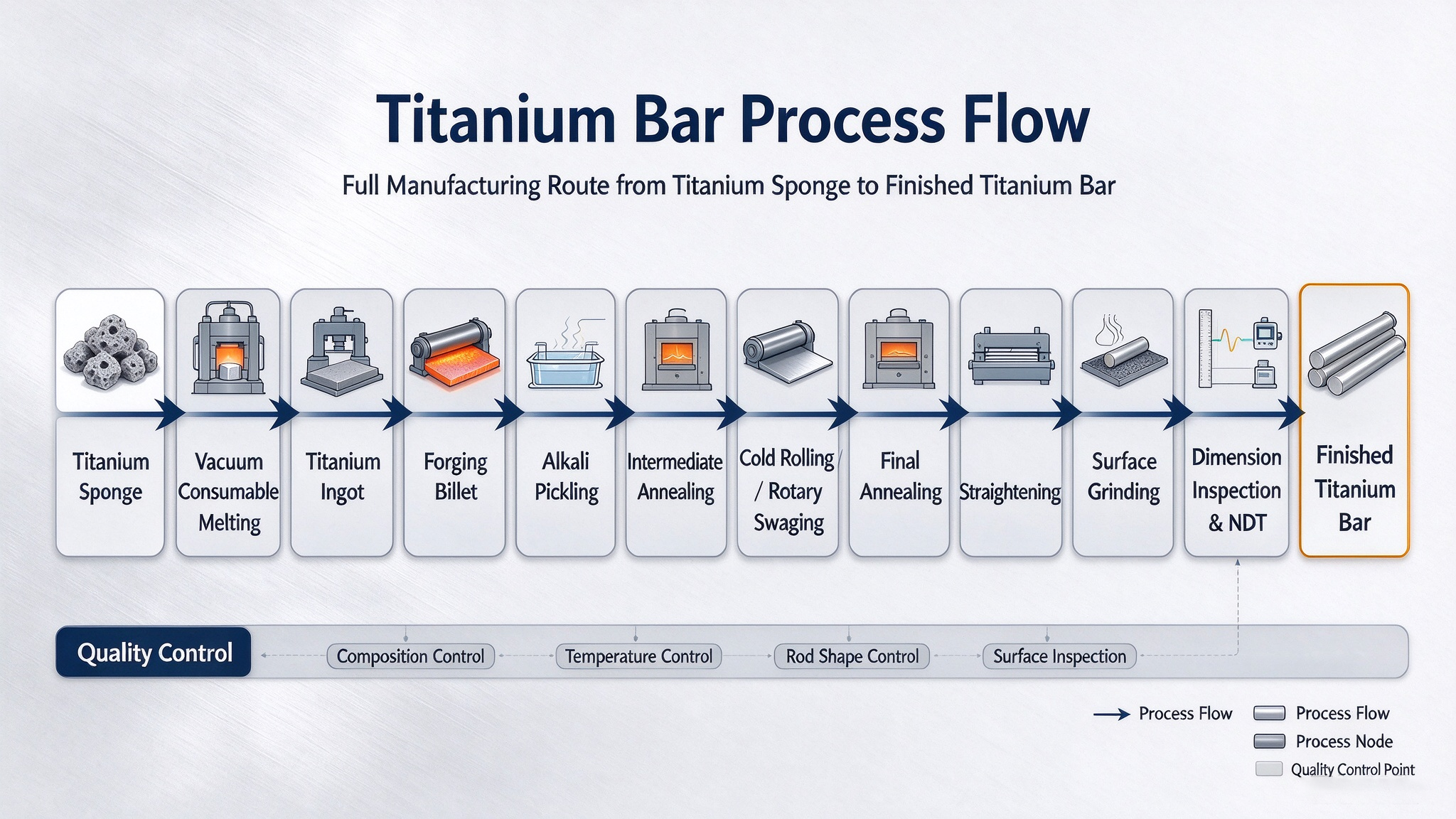
Titanium rods are solid cylindrical bars made from pure titanium or titanium alloys through forging, rolling, extrusion, and drawing. They belong to high-end non-ferrous metal processing materials, complying with the national standard GB/T 2965-2023 and the American standard ASTM B348. With a density of approximately 4.51g/cm³, they are only about 60% of steel. Their core advantages lie in their high specific strength, corrosion resistance, and biocompatibility.
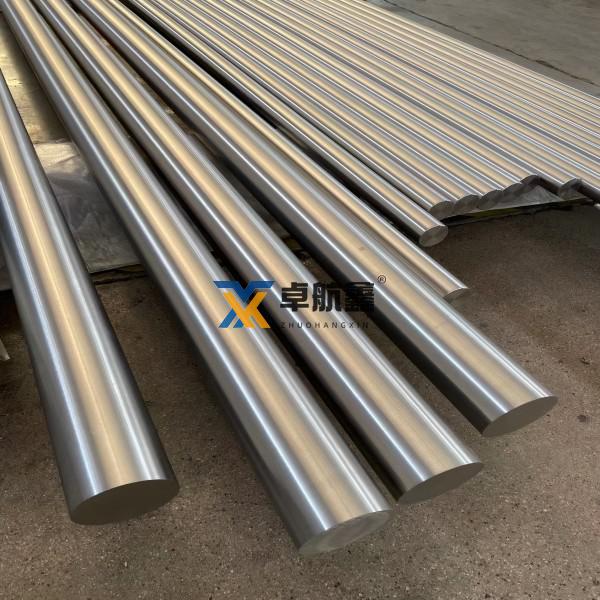
TC4 titanium bar
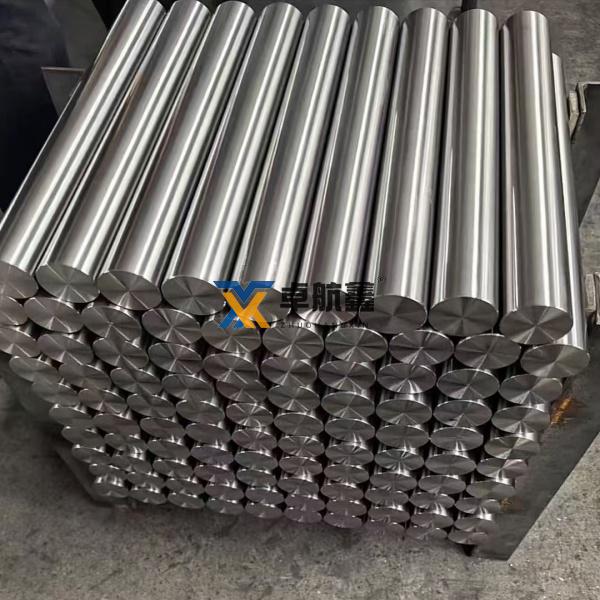
TA1 titanium rod
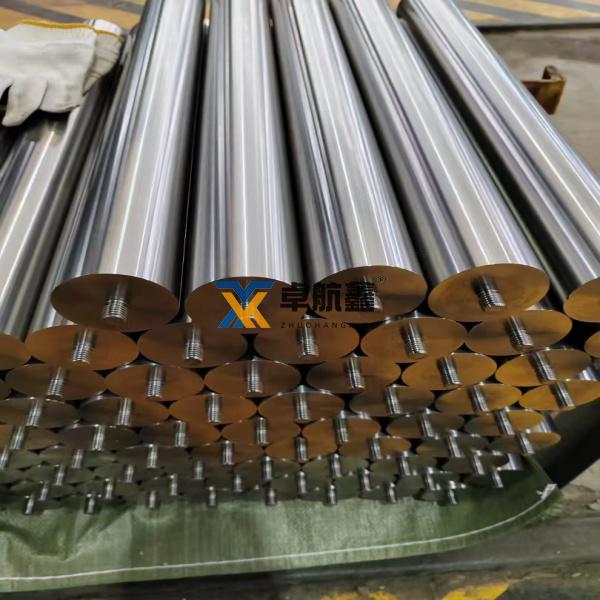
TA2 titanium rod
TA2 titanium rod
Chemical composition
| Grade | Nominal chemical composition | Chemical composition (mass fraction)/% | ||||||||||||||||||
| main ingredients | Impurity (not greater than)/% | |||||||||||||||||||
| Ti | Al | Si | V | Ni | Cu | Zr | Mo | Ru | Pd | Sn | Nd | Fe | C | N | H | O | Other elements | |||
| single | sum | |||||||||||||||||||
| TA0 | Commercially pure titanium | margin | - | - | - | - | - | - | - | - | - | - | - | 0.15 | 0.1 | 0.03 | 0.015 | 0.15 | 0.1 | 0.4 |
| TA1 | Commercially pure titanium | margin | - | - | - | - | - | - | - | - | - | - | - | 0.25 | 0.1 | 0.03 | 0.015 | 0.2 | 0.1 | 0.4 |
| TA2 | Commercially pure titanium | margin | - | - | - | - | - | - | - | - | - | - | - | 0.3 | 0.1 | 0.05 | 0.015 | 0.25 | 0.1 | 0.4 |
| TA1 GELI | Commercially pure titanium | margin | - | - | - | - | - | - | - | - | - | - | - | 0.1 | 0.03 | 0.012 | 0.008 | 0.1 | 0.05 | 0.2 |
| TA1G | Commercially pure titanium | margin | - | - | - | - | - | - | - | - | - | - | - | 0.2 | 0.08 | 0.03 | 0.015 | 0.18 | 0.1 | 0.4 |
| TA1G-1 | Commercially pure titanium | margin | ≤0.2 | ≤0.08 | - | - | - | - | - | - | - | - | - | 0.15 | 0.05 | 0.03 | 0.003 | 0.12 | - | 0.1 |
| TA2 GELI | Commercially pure titanium | margin | - | - | - | - | - | - | - | - | - | - | - | 0.2 | 0.05 | 0.03 | 0.008 | 0.1 | 0.05 | 0.2 |
| TA2G | Commercially pure titanium | margin | - | - | - | - | - | - | - | - | - | - | - | 0.3 | 0.08 | 0.03 | 0.015 | 0.25 | 0.1 | 0.4 |
| TA9 | Ti-0.2Pd | margin | - | - | - | - | - | - | - | - | 0.12~0.25 | - | - | 0.3 | 0.08 | 0.03 | 0.015 | 0.25 | 0.1 | 0.4 |
| TA9-1 | Ti-0.2Pd | margin | - | - | - | - | - | - | - | - | 0.12~0.25 | - | - | 0.2 | 0.08 | 0.03 | 0.015 | 0.18 | 0.1 | 0.4 |
| TA10 | Ti-0.3Mo-0.8Ni | margin | - | - | - | 0.6~0.9 | - | - | 0.2~0.4 | - | - | - | - | 0.3 | 0.08 | 0.03 | 0.015 | 0.25 | 0.1 | 0.4 |
| Grade | Nominal chemical composition | Chemical composition (mass fraction)/% | ||||||||||||||||||||||
| main ingredients | Impurity (not greater than)/% | |||||||||||||||||||||||
| Ti | Al | Si | V | Cr | Mn | Fe | Cu | Zr | Nb | Mo | Ru | Pd | Sn | Ta | W | Fe | C | N | H | O | Other elements | |||
| single | sum | |||||||||||||||||||||||
| TC4 | Ti-6Al-4V | margin | 5.50~6.75 | - | 3.5~4.5 | - | - | - | - | - | - | - | - | - | - | - | - | 0.3 | 0.08 | 0.05 | 0.015 | 0.2 | 0.1 | 0.4 |
| TC4ELI | Ti-6Al-4VELI | margin | 5.5~6.5 | - | 3.5~4.5 | - | - | - | - | - | - | - | - | - | - | - | - | 0.25 | 0.08 | 0.03 | 0.012 | 0.13 | 0.1 | 0.3 |
| TC9 | Ti-6.5Al-3.5Mo-2.5Sn-0.3Si | margin | 5.8~6.8 | 0.2 ~0.4 | - | - | - | - | - | - | - | 2.8 ~3.8 | - | - | 1.8 ~2.8 | - | - | 0.4 | 0.08 | 0.05 | 0.015 | 0.15 | 0.1 | 0.4 |
| TC10 | Ti-6Al-6V-2Sn-0.5Cr-0.5Fe | margin | 5.5~6.5 | - | 5.5 ~6.5 | - | - | 0.35 ~1.00 | 0.35 ~1.00 | - | - | - | - | - | 1.5 ~2.5 | - | - | - | 0.08 | 0.04 | 0.015 | 0.2 | 0.1 | 0.4 |
| TC11 | Ti-6.5Al-3.5Mo-1.5Zr-0.3Si | margin | 5.8~7.0 | 0.2 ~0.35 | - | - | - | - | - | 0.8 ~2.0 | - | 2.8 ~3.8 | - | - | - | - | - | 0.25 | 0.08 | 0.05 | 0.012 | 0.15 | 0.1 | 0.4 |
Mechanical properties
| Grade | Rm(MPa) | Rp0.2(MPa) | A(%) | Z(%) | Brief description |
| TA1(Gr1) | ≥370 | ≥250 | ≥20 | ≥30 | Good plasticity, easy to bend and process |
| TA2(Gr2) | ≥440 | ≥320 | ≥18 | ≥30 | Industrial commonly used pure titanium |
| TA3(Gr3) | ≥540 | ≥410 | ≥15 | ≥25 | Higher strength, reduced plasticity |
| TA10(Gr12) | ≥485 | ≥345 | ≥18 | ≥25 | Highly corrosion-resistant titanium |
| TC4(Gr5 Ti-6Al-4V) | ≥895 | ≥825 | ≥10 | ≥25 | General-purpose high-strength titanium alloy |
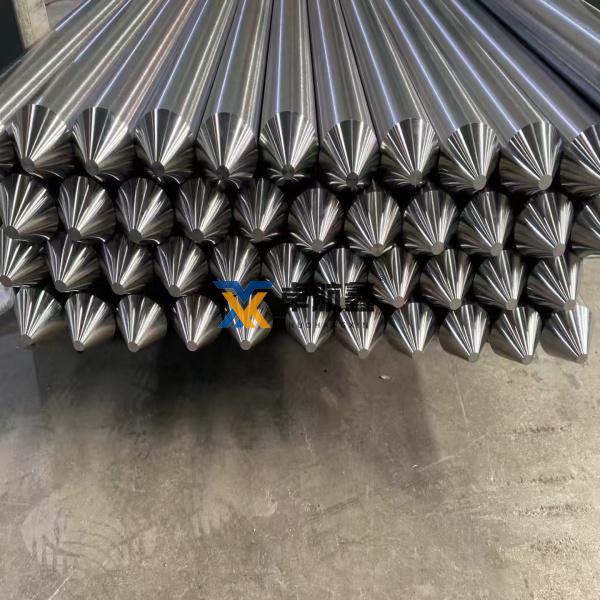
TC21 titanium alloy rod
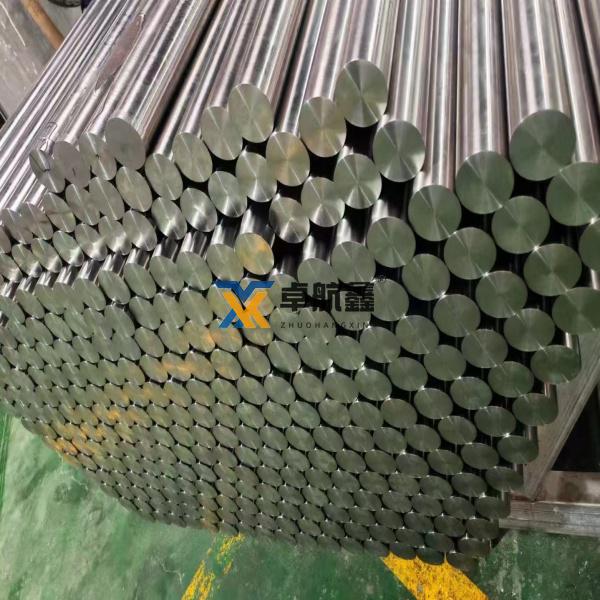
TC18 titanium alloy rod
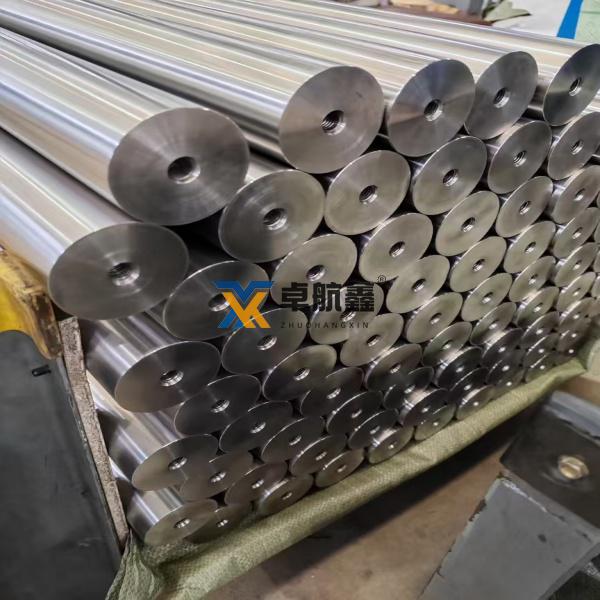
TC11 titanium alloy rod
Common grades
Industrial pure titanium rod
TA1 (Gr1): It has the best plasticity and is easy to process and shape
TA2 (Gr2): Comprehensive and balanced, commonly used in industry, suitable for corrosion-resistant parts, electroplating, and chemical applications
TA3 (Gr3): Higher strength, reduced plasticityTitanium alloy rod
TC4 (Gr5, Ti-6Al-4V): a versatile titanium alloy with high strength, widely used in aviation, fasteners, tooling, and sporting goods
TC4 ELI (Gr23): Low clearance version, for medical implants
TA9, TA10: resistant to strong corrosion, suitable for strong acid and alkali chemical equipment
Surface morphology
Black leather rod: forged and rolled raw leather, low price, subsequent extensive processingTurning rod (peeling rod): turning and peeling, with stable dimensions
Polishing/buffing stick: fine grinding of mirror surfaces, high tolerance (h6/h7), medical use, precision parts
TC9 titanium alloy rod
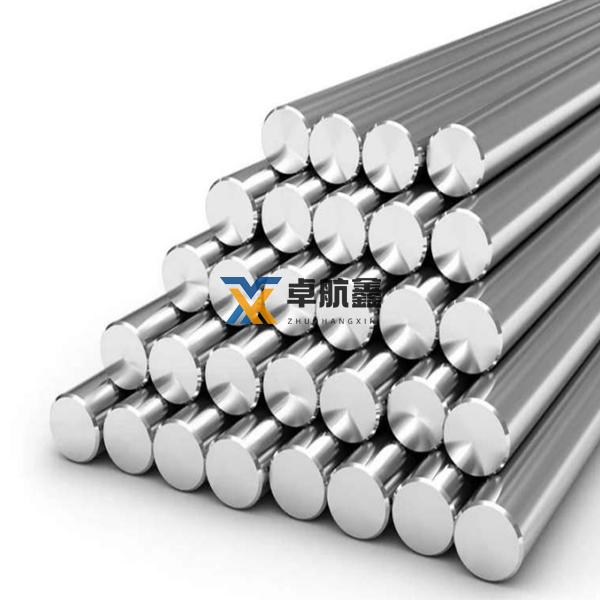
TA10 titanium rod
TA15 titanium rod
Processing Technology
Core Features
1. High specific strength: Lightweight yet high in strength, with some titanium alloys having strength close to that of alloy steel, resulting in a significant weight reduction effect
2. Excellent corrosion resistance: A stable oxide film forms on the surface, making it resistant to seawater, weak acids, alkalis, and chloride ions, and less prone to rusting. It is suitable for marine and chemical industrial conditions
3. Good biocompatibility: non-toxic, non-rejection, suitable for human implantation, widely used in medical field
4. Stable performance at high and low temperatures: it is not brittle at low temperatures and can operate for extended periods at high temperatures (typically within 500℃ for titanium alloys)
5. Non-magnetic, low thermal conductivity, suitable for non-magnetic environments and thermal insulation scenarios
Main application areas
1. Aerospace: Structural components, bolts, connectors, landing gear parts
2. Medical and health: orthopedic rods and screws, joints, dental implants (compliant with GB/T13810, ASTM F136/F67)
3. Chemical industry, petroleum, seawater desalination: heat exchangers, pump shafts, valves, corrosion-resistant components
4. Marine engineering: marine shaft components, seawater equipment
5. Others: electroplating racks, outdoor equipment, sports equipment, precision instrument parts


